Somewhere between a brass band playing in a colonial-era Accra ballroom and a Ghanaian singer topping a playlist in Berlin, West African popular music quietly became one of the most influential sounds on earth. The word people reach for now is afrobeat, though it gets used to cover at least three different things, and untangling them makes the achievement clearer rather than smaller.
Highlife came first, and it came from Ghana
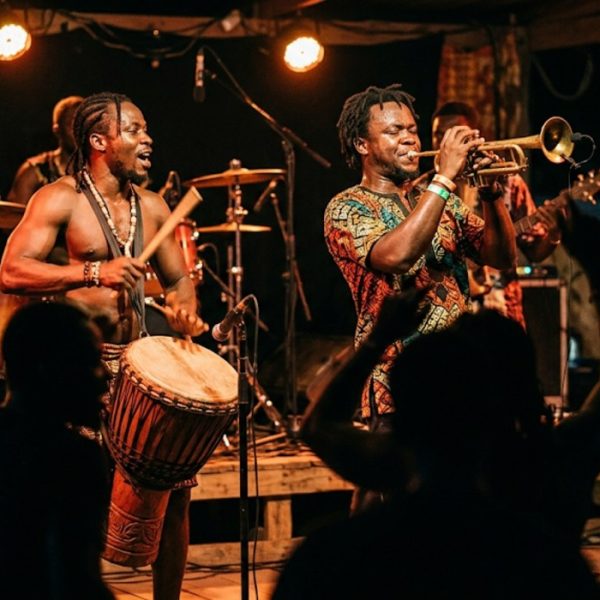
Long before anyone was talking about global crossover, Ghanaian musicians were fusing imported brass band instrumentation, sailors' songs and Akan rhythmic patterns into something new. That was highlife, and by the 1920s it had a name, a circuit and an audience. The name itself was a joke about class, coined because the dance bands played for the wealthy few who could afford the venues. E.T. Mensah and the Tempos took it across West Africa in the 1950s. Guitar band highlife took it into the villages. Nothing that came afterwards makes sense without it.
Afrobeat is one man's invention, and it is not the same thing
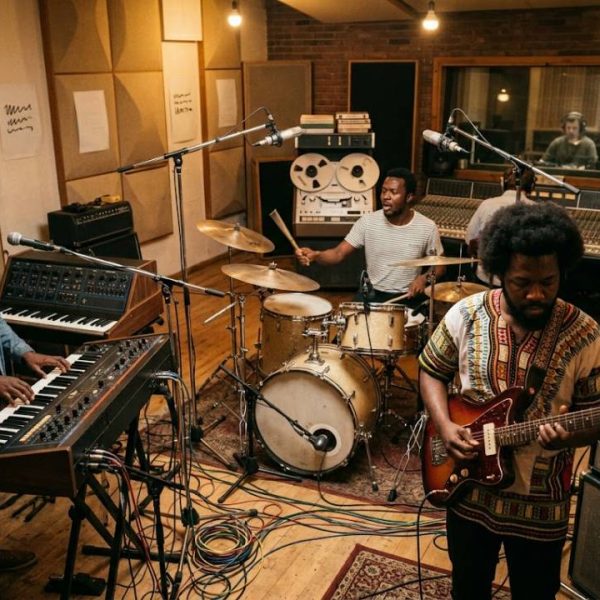
Here is the distinction that trips up almost every casual listener. Afrobeat, singular, is the style Fela Kuti built in Nigeria at the end of the 1960s, working with the drummer Tony Allen. It welded highlife and jazz to American funk, then stretched the results into long, hypnotic pieces built on a repeating groove, with lyrics that went directly after the political class. Tracks ran fifteen minutes. Horn sections stacked in layers. It was dance music that expected you to pay attention, and half a century later producers are still mining it.
Afrobeats, with an s, is something else again
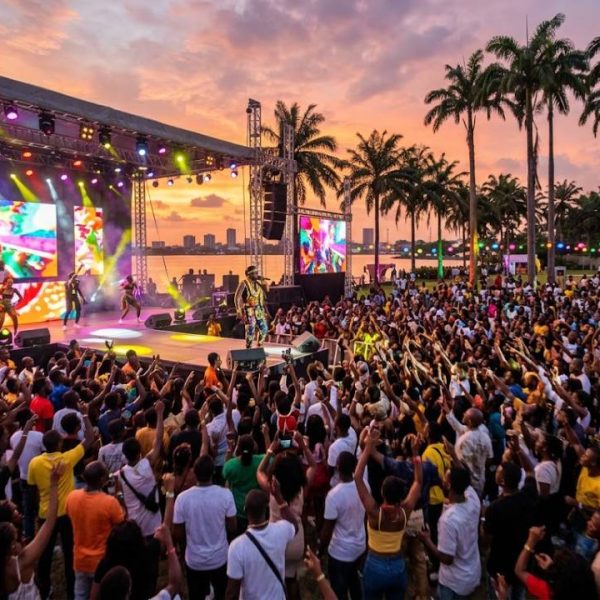
The plural version is a marketing term that stuck. It describes the wave of West African pop that came out of Lagos and Accra from roughly the mid 2000s onward, and it is far broader than anything Fela made. It absorbs dancehall, hip hop, R and B, and above all local club styles. The tempos are shorter, the production is cleaner, and the subject matter is mostly love, money and Saturday night. Purists dislike the label because it flattens enormous variety into one word. They are right, and the label is not going anywhere.
Ghana's own line runs through hiplife
In the mid 1990s Reggie Rockstone started rapping over highlife rhythms in Twi, and hiplife was born. It gave a generation of Ghanaian artists something the imported version never could, which was the sound of their own city in their own language. The azonto dance craze that swept out of Accra around 2011 came from that lineage, and so does a good deal of what now gets filed under afrobeats. Anyone tracing the history of highlife will find the thread running straight through to the current chart.
Why the sound travelled when it did
Talent was never the constraint. Distribution was. For decades a hit in Accra stayed in Accra because the physical supply chain stopped at the border and radio programmers elsewhere had no reason to care. Streaming removed that bottleneck in about five years. A song uploaded in Ghana now sits on the same shelf as one recorded in Los Angeles, and the algorithm does not know or care where the studio was. The rise of the most popular music streaming services did more for African music exports than any cultural policy ever managed.
The diaspora did the rest
London, Toronto and New York have large West African communities whose children grew up between two sound systems. Those listeners became the bridge audience, then the promoters, then the producers. British West African artists in particular pushed the sound into mainstream UK radio, and once that happened American labels started paying attention. Very little of this was planned. It looks like strategy only in hindsight.
Ghanaian music travelled because the diaspora kept bringing it home and taking it out again. That circulation is the same instinct behind the best homecoming ideas, where a returning community plans an event around the food, music and rituals it has carried elsewhere. The programme ends up being a portrait of where everyone has been.
Ghanaian musicians did not reach global audiences by accident; they built distribution, merchandising and direct-to-fan sales alongside the music itself. Independent artists now run their own stores for vinyl, tour merchandise and digital releases, which turns a creative career into a retail operation almost overnight. Plenty of them lean on shopify experts to handle the storefront so that studio time stays uninterrupted.
Language stopped being a barrier
One of the more interesting things about the current wave is how little it compromises. Songs move between English, Pidgin, Twi and Yoruba inside a single verse and the international audience simply goes along with it. That is a real shift. For years the assumption was that global success required singing in plain English, and the assumption turned out to be wrong. Anyone working in transcreation and creative adaptation will tell you the same thing about advertising and film. Audiences follow feeling first and vocabulary second.
What Ghana still gets wrong
The honest complaint from Ghanaian artists is about infrastructure rather than ability. Royalty collection remains patchy, live venues are thin outside the big cities, and Nigerian labels have far deeper pockets. Plenty of Ghanaian records have gone global while the money stayed elsewhere. Fixing that is unglamorous work involving rights administration and touring circuits, and it will decide whether the next decade belongs to Accra or merely passes through it.
Where the sound goes next
The interesting movement right now is inward rather than outward. Younger artists are pulling harder on local sources, from gospel to drill to older palm wine guitar styles, instead of chasing whatever charted last year. That is usually the sign of a scene that has stopped needing external approval. Whatever it gets called by the time it reaches your playlist, the line back to a highlife band in a Ghanaian dance hall will still be there.